GUARDING THE QUEEN... and all the chaos Which goes with it
Yes, you read the title correctly – this section is, in part, about guarding Her Majesty Queen Elizabeth II. A widely known fact, in the military at least, is that the Queen’s Guards have always performed a dual role in the service to Queen (Or King) and Country… As steely-eyed of light infantry and as the ceremonial guards at the various palaces of the monarchy. The ceremonial role, in recent times, has fallen to other areas of the army to assist with due to the high operational tempo of the Armed Forces – this is why you may be surprised by a lack of red tunics and bearskins at some of the locations you thought you would find a Guardsman.
Though shalt not move, until you patrol! Though shall not speak, unless spoken to by a senior rank or member of the Royal Family… The guidelines of what you could and could not do whilst on guard were relatively light… But more on that later.
Guarding the Queen… And all the chaos which goes with it…
The boring bit at the start…
Ceremonial duty is one of those things that seem very cool in theory, but is actually a righteous pain in the ass in practice. Early mornings and unreasonably high expectations of kit presentation are the fundamentals of life as a Queen’s Guard outside of the Infantry role.
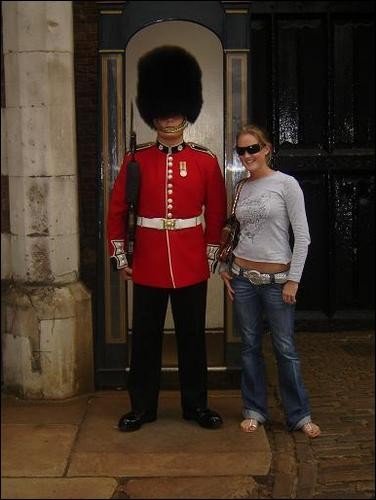
There are 4 main locations where you undertake regular ceremonial duties… Buckingham Palace, St. James’ Palace, Windsor Castle and The Tower of London. These duties are serviced by Foot Guards (And at a later stage other serving Regiments), Household Cavalry and Regimental Bands – it is truly an amazing spectacle for the millions of people who venture to see the Changing of the Guard and have their photo next to a Guardsman.
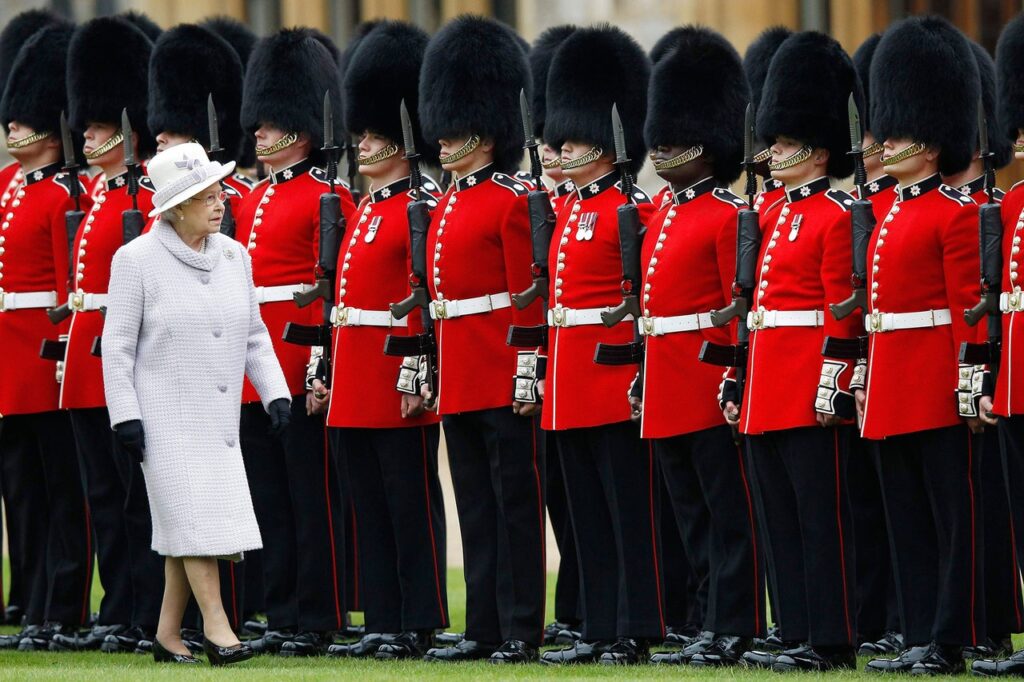
The Queen’s Guards have a very distinctive “look” when compared to their ceremonial counterparts. The most recognisable elements of this are the bearskin, or busby, and the red tunic. The elements which people do not realise symbolise something are in 2 areas – The buttons, and how they are positioned, which adorn the tunics and the colour of the hackle, the feathery looking thing, in the bearskins… This is the easiest way to tell which Regiment is on guard at any given time (And without a list, there would be chaos):
- 1 Button, White Hackle on Left = Grenadier Guards
- 2 Buttons, Red Hackle on Right = Coldstream Guards
- 3 Buttons, no Hackle = Scots Guards
- 4 Buttons, Blue Hackle on Right = Irish Guards
- 5 Buttons, White and green on left side = Welsh Guards
Understanding the basics of being “on guard” is key…
- A single Guardsman will be stationed when the Queen is not in residence.
- Double that if she is.
- In summer, there is a Changing of the Guard every day (This is purely for the tourism industry).
- In winter, it is done every other day.
- A Guardsman should never speak to the public… I say “should” here due to the fact that EVERYONE talks if the situation lends itself to it.
- A Guardsman will not move unless:
- They are about to do a patrol.
- They are about to present arms to a member of the Royal Family.
- A senior rank is approaching their guard post.
- A Guardsman will carry live rounds IF the threat dictates it.
The fundamental truth, which many people tend to forget or are unaware of, is that a Guardsman is a trained and equipped infantry soldier (In the Guards Division at least). Their mandate is simple – stand, move only when necessary, do not talk to the public and protect life within the rules of self-defence (Or for those who know – Card Alpha).
A whole lot of rehearsals and early starts…
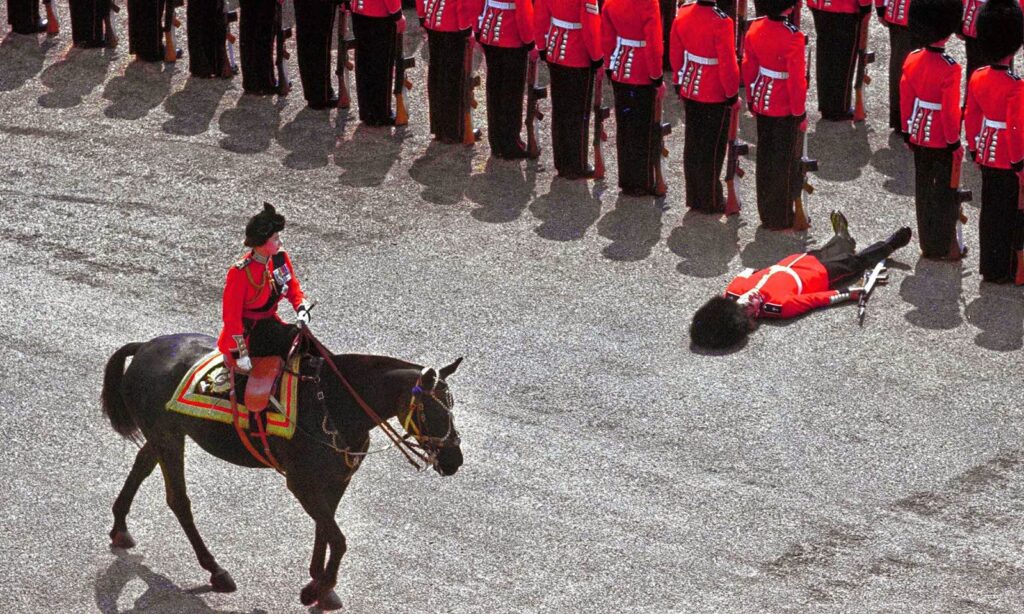
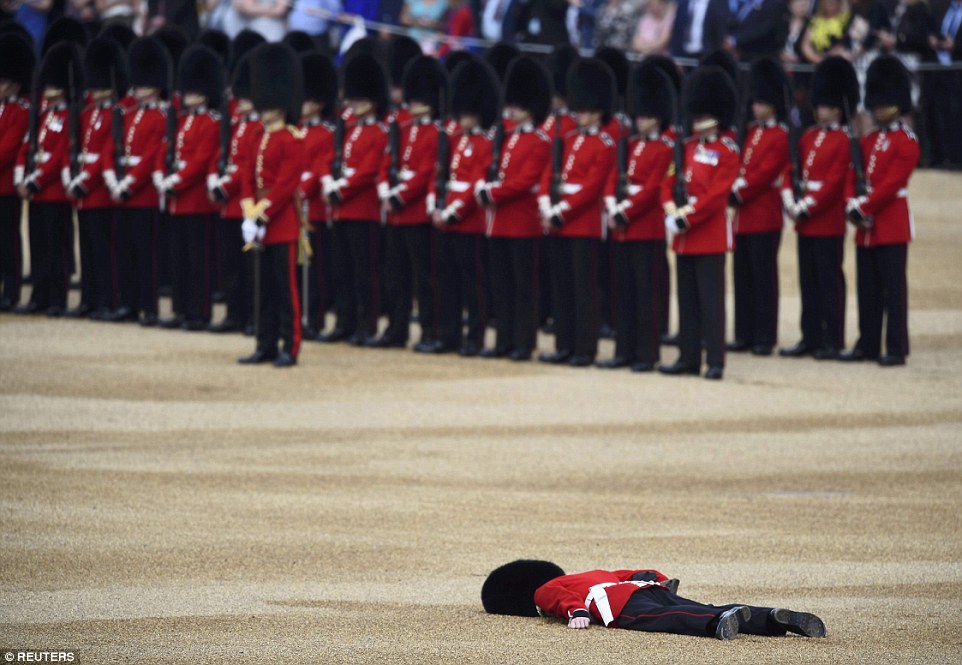
Summer was my absolute worst time to be on ceremonial duties. Between the 24hr palace guard changeovers and the fact that it always signalled the start of Troop Season (The leadup to the Queen’s birthday parade – Trooping The Colour) you knew that you were in for a world of pain as a member of the Guards Regiments on ceremonial duties.
During my time on ceremonial duties, we were stationed in Windsor Barracks. Apart from the fact that it was an Army Barracks and that it meant you had to undertake the journey to London every time you were in either Buckingham Palace, St James’ Palace or The Tower of London guards – it was a lovely Barracks to be in…
Very much like everything else in the Army – your life revolved around a schedule. Whether it was a “normal” training day or a guard mount, you knew exactly where you needed to be, how you needed to be dressed and what you needed to take with you… For the organiser in me, it was kind of like heaven (Just a lot more painful and with a lot more shouting).
We rehearsed everything, as only people who have been in the Forces would understand. Your life revolved around rehearsing to a point where the aim was that anything you needed to do a lot would be more like muscle memory than something you had to think about. This was true of everything from getting onto a troop transport to coming under sustained fire… It was a tried, and tested, method of ensuring that you didn’t have to worry about the person next to you not knowing what they needed to do.
The mornings ran like clockwork… Just like every morning in summer…
- 04:30: On the bus destined for London.
- 07:00: Practice “the mount” in Wellington Barracks.
- 08:15: Get dressed.
- 08:45: Kit Inspection.
- 09:15: Band arrives.
- 09:45: Officers arrive.
- 10:00: Changing of the Guard commenced.
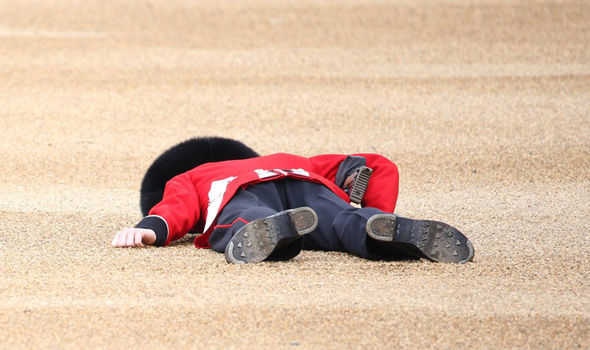
A band, Star Wars and the adoring public…
Whilst the general public may have a different opinion… My favourite part of The Changing of The Guard has, and will always be the military bands. The experience of marching to a full, world class, military band is not something that can be replaced easily. Many a day on the forecourt of Buckingham Palace I found myself having to resist the urge to tap my feet to the rhythm of the Star Wars theme song, Abba’s MamaMia, MJ’s Thriller and all the way through to Arena Franklin’s R.E.S.P.E.C.T… They truly added the key element to the spectacle that is the Changing of the Guard.
As one of the symbols which people often associate with London, as a Guardsman you were always inundated with people wanting to have photographs with you. This often led to hilarious encounters with people of every nationality. My thoughts jump immediately to St. James’ Palace Number 2 post which sits on the intersection of St. James’ Street and Cleveland Row. Standing on the street, with full access to the public, you are literally at the mercy of your adoring fans. From the tour buses of Asian tourists to the quaint old duck out for a stroll, if you did not have a minimum of 100 photos taken of you with some random next to you during your 2 hour shifts – it was a slow day.
As a self-proclaimed extrovert, my favourite parts of the various ceremonial duties were always the part when we were given leave to go and walk around the palaces and tower, dressed in full kit, to enjoy both the location and the interaction with the public. From the plethora of photos to the propositions of marriage, it was always a welcome change to the way the general British public treated members of the Armed Forces. I mention this only briefly because there was a time, in my service, where disclosing you were a member of the Armed Forces would get you kicked out of an establishment or barred entry.
It was the public which generated your sole element of entertainment during your time on sentry. The meek Chinese tourist, who under direction from their friends and family, edges closer and closer to you in the hopes of getting that desirable holiday snap of them next to a Guardsman on Guard… The patience of waiting to the point where they nervously stand a breath away from you only to pounce to attention and have the horde of them scuttle away like a troop of scared monkeys startled by a snake – this was the stuff that made the monotony of the event worthwhile… But you did not laugh, you didn’t smile, not even a smirk – this was the way.
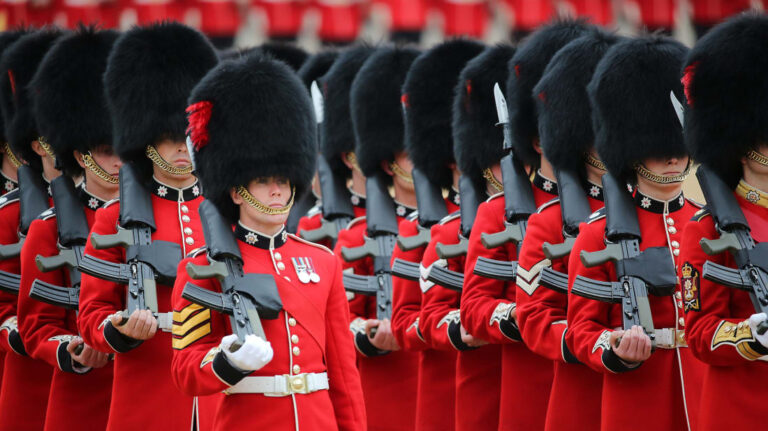
Pranks, laughs and brotherhood…
In winter we spent 48hrs on duty, which meant you were generally going to be cooped up in the barracks annex of a Palace or The Tower. Whilst this would be the perfect time to relax and get some stability in a world of ever-changing goalposts, it made a lot more sense to play pranks on one another and generally become a nuisance to your fellow Guardsman.
The pranks were limited, but highly effective… Not something that you would be proud of, or admit to, doing in any open forum. I can happily admit to 3 of the 4.
- Baby powder in over-gloves (Winter). Simple, yet effective, to undertake this prank. The unknowing victim deploys out to his sentry post and at shouldering arms a significant ‘poof’ of powder is thrown out of the gloves both to the dismay of the prankee and the non-commissioned officer who is stationing him.
- Shaving foam in boots (Summer and winter). A basic prank which targets the “getting ready” phase of a Guardsman’s process to getting on sentry. The prankee pushes his foot into his drill boots only to find a squishy surprise deep in the boot.
- Shoe polish on the rim of the bearskin (Summer and winter). This prank relies on time and heat due to the fact that you really want the prankee to start sweating to get full effect from the polish running down the face to be achieved.
- “Scuffing” the chinstrap (Summer). To give some context here, the chinstrap is the brass and leather strap which sits above the chin attached to the bearskin. This prank is by far the most offensive and rarely done, unless you are a very junior Guardsman and it is your first time on guard. This involves doing some horrible things to the leather part of the chinstrap (Rubbing rotten food or sweaty nether-regions on it) and relying on the heat and sweat to engage the various putrid smells it could cause. The resulting retching from the prankee, whilst hilarious, is something that most Guardsmen have heard at least once in their careers.
For the bulk of them, the pranks are taken lightly by most of the prankees due to the fact that it opens up the doors for retaliation, which is almost always encouraged. At the end of the day, as brother soldiers, you realise that in order to remain sane in the situations you find yourself in the Armed Forces, you really need to have a sense of humour and learn to not take yourself too seriously.
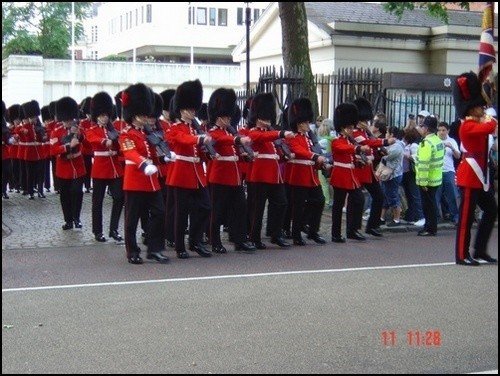
History and what is to come…
Above everything there is a unified sense of pride from performing ceremonial duties, whether it be standing on guard or being part of Trooping The Colour which comes from the fact that for generations these activities had been undertaken by brother (And later, sister) soldiers in war and in peace. Whilst many people would not leave their mark in history, they were living something which has been done since 1660, and will be done for many years to come – they will in essence form part of the history of the Regiments in which they served.
It was truly an amazing experience being given the ability to roam the palaces and the tower to an extent that the normal public would be amazed at. To see the history in the artwork, furniture and architecture within them was honestly something which I had never dreamt of experiencing.
Looking back on that now it makes me appreciate how I value history and realise how bad it is that people do not show an interest in it. Whilst the past cannot be changed, it does affect who we are and where our civilisation is… It is not something that you can just erase or change because it suits your narrative or end goal – the sooner people become aware of this, the better off we will all be.
Accept the past and work to make the future better – this is all we can do.