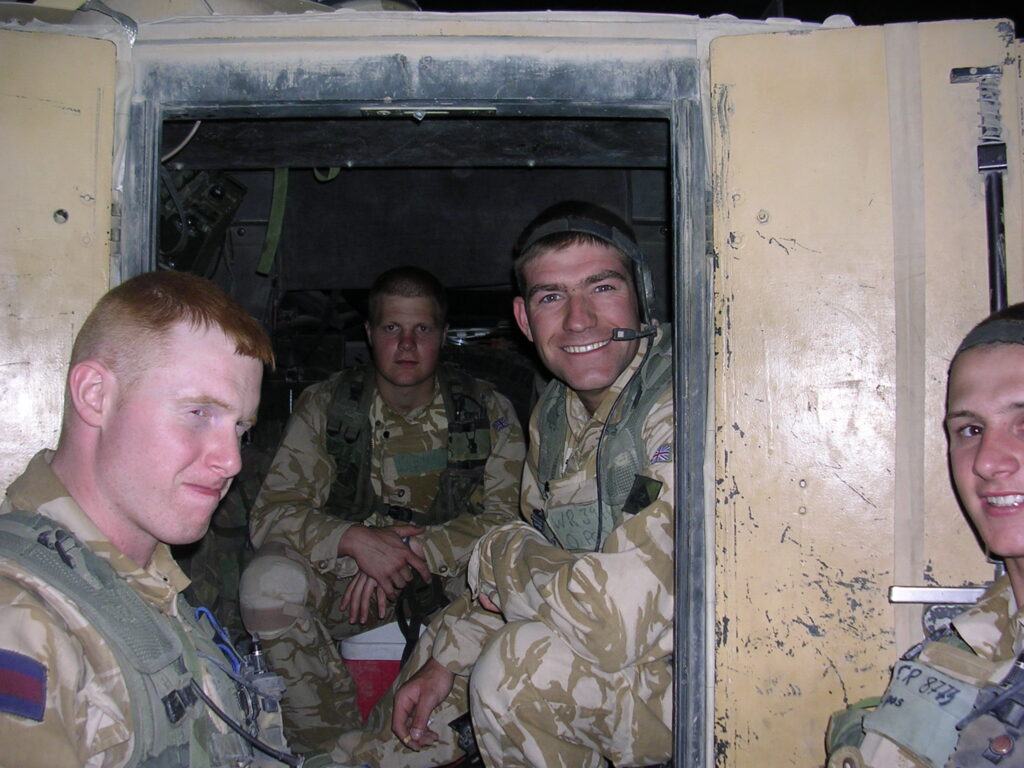
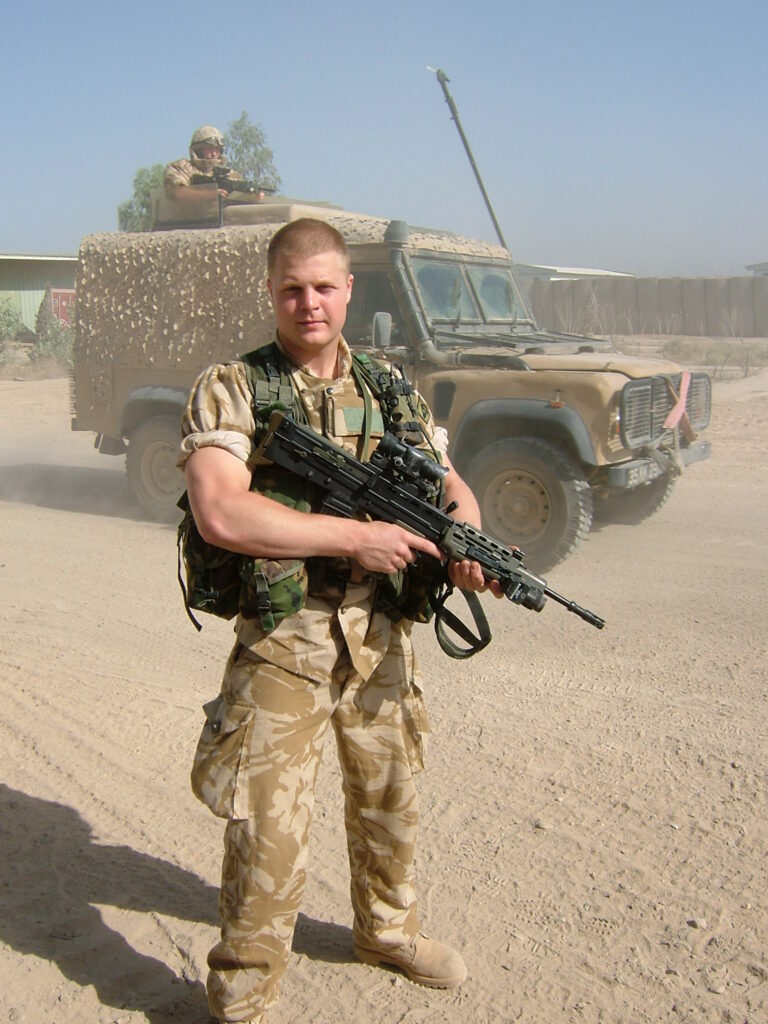
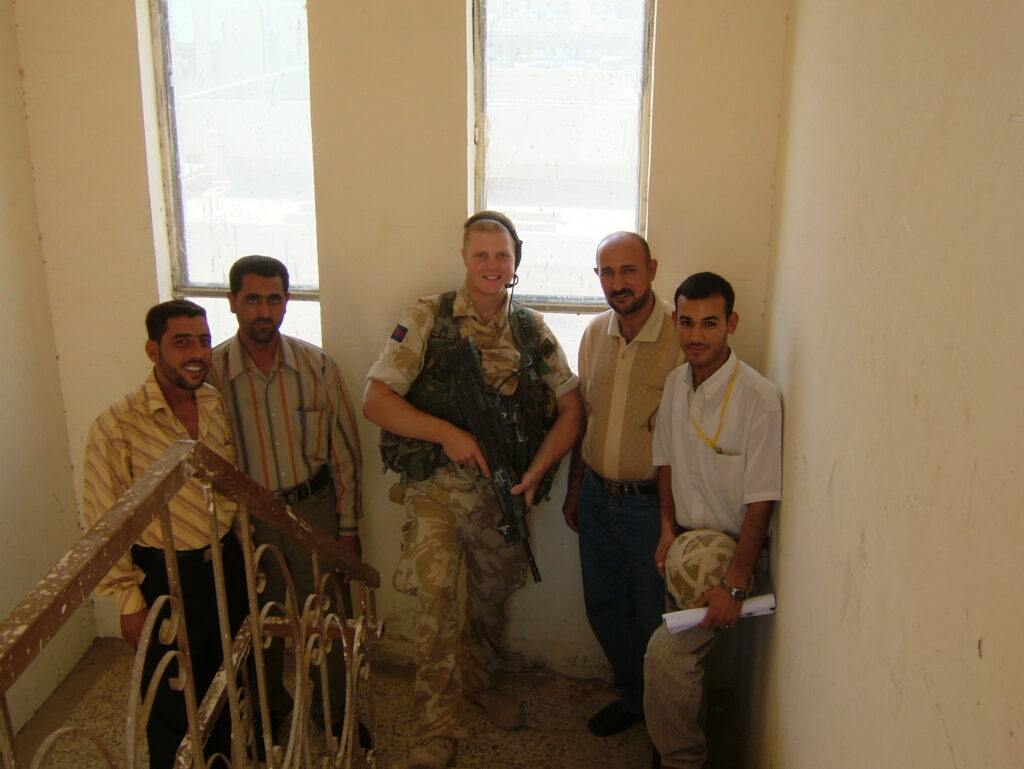
RYAN OF IRAQ - Assume super-secret hiding positions!
Coming to the realisation that your chosen path is going to put you directly in harm’s way came early on to me in my military journey…
9/11 happened and the Western world started its campaign against terrorism which firmly placed their interests in 2 countries – Iraq and Afghanistan. And on the 20th of March 2003 a US led coalition entered Iraq to remove Saddam Hussein from his seat as the unilateral dictator of the country. Under 11 months (Feb ’04) after that I landed in the UK and signed a minimum of 4 and a half years over to the Crown and 15 months after that (May ’05) I would set foot in Iraq as part of the light infantry contingent of the Al-Amarah based, ground holding, battlegroup.
I figure that the above could be used as a great example of “How to put yourself in harm’s way” if you ever need to talk someone through the best way to do it…
RYAN OF IRAQ – Assume Super-Secret Hiding Positions
Reality is a hard pill to swallow…
The process for a Regiment to deploy on active operations is a, necessarily, long and testing process which aims to ensure that the personnel who will be putting themselves in danger do so with the highest levels of confidence possible, both in themselves, their kit and most importantly the person standing next to them. This process usually involves around 12 months of arduous training and test exercises of very operationally specific scenarios prior to setting off on the journey to the operational theatre of choice.
I did not have this luxury as my Regiment (The 1st Battalion Coldstream Guards) had already deployed while I was in the last few weeks of Basic Training. This meant that I would undergo the accelerated Battlefield Casualty Replacement pre-deployment training which saw me join in on a very condensed 2 week programme of basic linguistics, combined patrols, vehicle & personnel searching, IED (Improvised Explosive Device) handling and working with interpreters. It was safe to say that my brain was full at the end of it.
I was given my last weekend of freedom shortly after that. A weekend visit to London to see some of my closest friends for the last time in 6 months. Chaos and drinking ensued to a point that I was left to roam the unknown streets of London alone as I had somehow missed the call to leave the club that we were at, and my inebriated friends failed to notice my absence. 3 hours and 16km later I emerged at their house like a homing pigeon significantly more sober than when I started my walk… The military fitness and direction finding abilities had paid off eventually. The next day, almost ceremonially, we sat around the lounge as my friend shaved off the remnants of my hair – for the first time, in a long time, I resembled a tennis ball. With tearful goodbyes I left the friends, who were the family I chose, aboard a train destined for Aldershot and my last days in the UK for a while.
What followed became something which I would immediately learn to hate about going on Operations and something which was a requirement of every person entering an Operational Theatre. On the Tuesday night before my journey began, I sat in my 4 man room in Aldershot Garrison in South West England and I penned the first, of many, “death letters” to my family which would be sent to them in the event of my demise… This act filled me with so many raw emotions, the realisation that I could very possibly not see my family and friends again hit me like a ton of bricks. It was safe to say that sleep did not come easy to me that night.
Out of the fridge, into the oven…
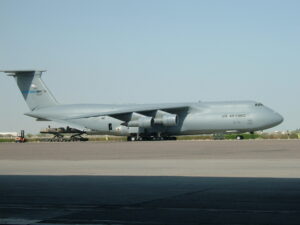
Military flights in general are not usually comfortable, nor are they quick… There are no comfortable arrival/departure terminals, there are no accommodating airhosts and there is definitely no in-flight entertainment, unless you count the chaos that 100+ soldiers cause being confined together for hours on end. UK => Cypress => Qatar =>Iraq – a seemingly un-endless circle of the guys get rowdy, a senior Non-Commissioned Officer shouting at them, they keep quiet for a bit and then they start up again… That, in addition to the realisation that no one cared to manage their bowel movements in a packed airplane meant that these loud, stinky, flights would become something which I would always detest going forward.
Temperature plays a huge factor in the deployment of a UK based force to a place like Iraq. Like most Middle East countries, the arid desert landscape generates some stinking day temperatures in comparison to the relatively comfortable/cold evening… This means that, for every deployment, a period of acclimitisation is need to ensure that the troops are combat effective in the theatre of operations. What this also means is that you are forced into transitory accommodation with all the people you have just spent days on a series of planes with. This acclimitasation consisted of a period of briefings and exercise which was usually conducted at the Main Operating Base for the operational deployment. The bases were broken up as follows (In descending size order):
- MOB – Main Operating Base
- FOB – Forward Operating Base
- PB – Patrol Base
We arrived, as many military deployment flights do, in the cool middle of the night to be welcomed by an endless barrage of people shouting at you. They shout at you to get off the plane, they shout at you to go to the transport, they shout at you to get your kit and they shout at you to get food… I was very prepared having joined the Army to be shouted at but there were points where I just felt that they were shouting for shouting’s sake. Tired, grumpy, and disorientated we gathered our kit, grabbed a bag of unappetising “food” and boarded the troop transports destined for the airconditioned fart-hole which was the transit accommodation.
The proceeding days flew by quickly. Cultural briefings, safety briefings, medical briefings, briefings about upcoming briefings… They seemed to merge into long one session of people talking at you with the end-goal being that you understood the intricacies of the operation you were embarking on. I still remember the first briefing, in theatre, about the IED (Improvised Explosive Device) – whilst I we had briefly covered these in my short pre-deployment training the true impact, and fear, of this weapon would become apparent quickly. Hidden in animal carcasses, dug into walls, under culverts, covered in expanding foam and rolled in sand to make it look like a rock – these deadly devices were the leading threat to every soldier on the ground.
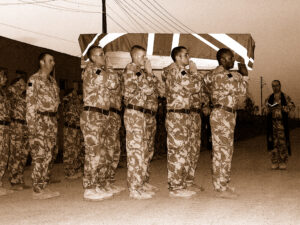
The true realisation of what I was embarking on hit home on the 2nd May 2005 when Guardsman Anthony Wakefield was killed by an IED whilst on a vehicle patrol in Amarah, Iraq – He was a member of the Company which I would be joining in a mere 2 days (I was already on the plane there at this point). “He was acting as the top cover sentry in the second of a two-vehicle patrol when what appears to have been an improvised explosive device detonated – disabling the vehicle and injuring another soldier,” Lt Col Andrew Williams said. “Despite receiving first aid at the scene and in the helicopter that evacuated him, he sadly died of wounds.” His colleague is thought not to be seriously injured.” – This, an excerpt from The Guardian of what happened… A 24 year old, father of 3, taken too soon.
The day had eventually come for me to undertake the final leg of my journey to join my Company (Number One Company, First Battalion Coldstream Guards) in Camp Abu-Najee, Al-Amarah. Once again the logistics division employed their team of shouters who directed us from towards the various embarkation points for the last time. I bid farewell to the fart-hole and jumped on a Hercules C-130 Troop Transporter and held on tight for the quick “hop” to what would become my home for the next 7 months.
Home Sweet FOB…
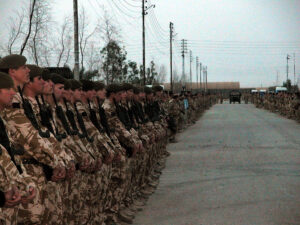
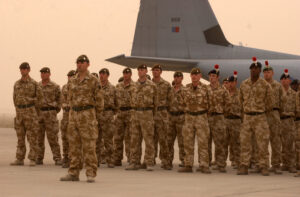
There are not many experiences in my life which I look back on and can still vividly remember the utterly overwhelming internal panic I felt as I do when I think back to how I felt in the first few days with my new team. To try and highlight some of the root causes of this…
- The Company had just lost a hardworking and highly regarded soldier.
- Company morale was at an all-time low.
- Company anger and frustration was at an all-time high.
- I had only finished my basic training 2 months before this point (So I was as green as green can be).
Flying over the seemingly endless desert landscape interspersed with small settlements around obvious oases, it almost seemed as if it was a serene and peaceful place – it was always hard to comprehend the difference between what I knew of the country and what I saw in those fleeting moments. Caravans of camels roamed almost freely over the sandy hills, watched from a distance by their eagle-eyed shepherds, scattered at the sound of the large twin-engine aircraft screaming across the cloudless sky. Within, what felt like moments, we were already in our final approach. The C-130 rocked violently from side-to-side and up and down – an action that was a requirement at this stage of the flight due to the high risk from RPG (Rocket Propelled Grenade) and small arms attacks.
Once again, the shouting started, but this time it was warranted… The “airfield” sat well outside the protective walls of the camp and required 2 Platoons of armoured troop carriers (APCs) and a light infantry to clear and secure – so static time on the ground meant significantly increased risk of contact with the enemy… Specifically, the fact that the 34 tonne Aircraft creating a mammoth sized dust-cloud meant that it was very easy for insurgents to know when there was activity in the area. We were bundled onto troop transports as quickly as we could and escorted back to camp while the logistics crews removed the kit and supplies from the plane.
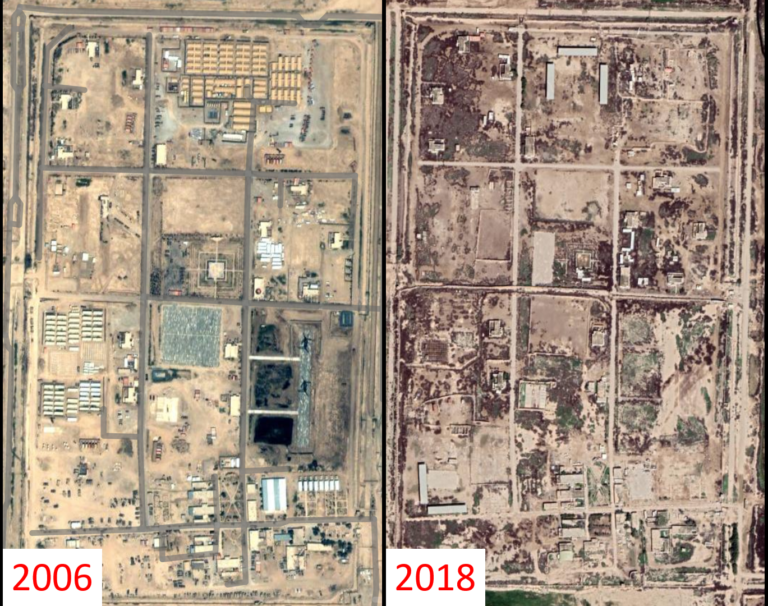
Camp Abu-Najee itself was not what you would call small, the outer perimeter stretched for 2.6kms, however this made sense when you factored in that it had to house a Squadron of Challenger 2 Tanks, a Company of Armoured Infantry Warrior APCs, a Company of Light Role Infantry and all the Combat Support/Combat Service Support Arms which were required to facilitate the ground operations and maintenance of the equipment.
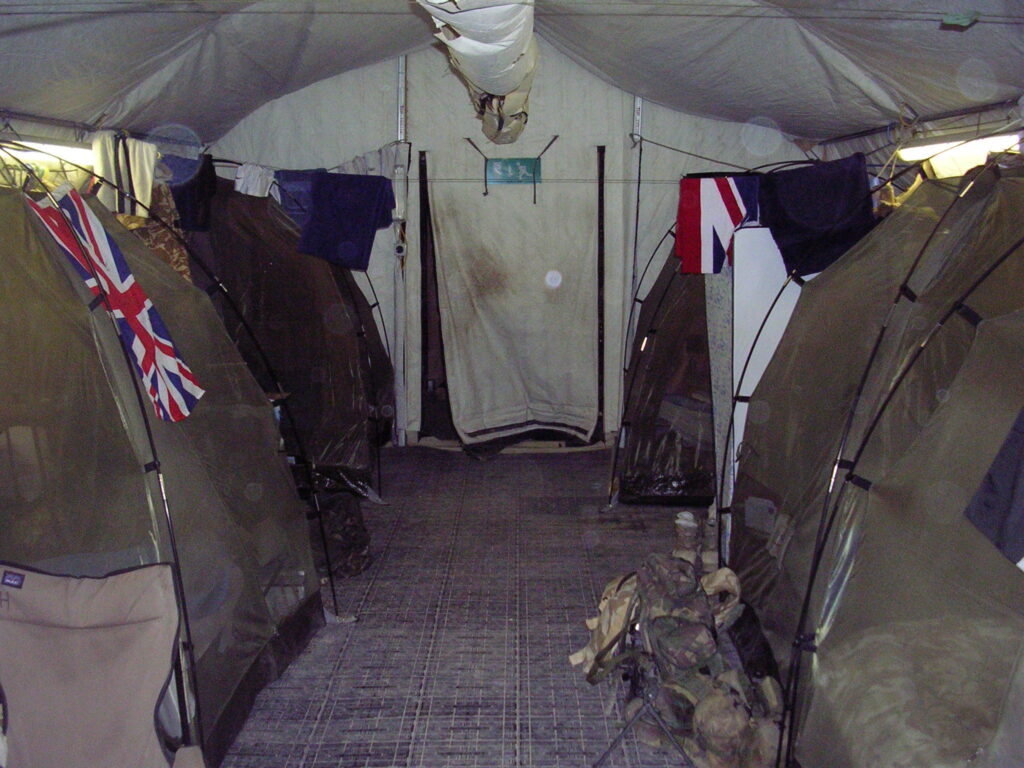
The camp was a “typical” British Military FOB. We lived in expeditionary tents which had shower blocks attached and, very importantly, air conditioners – which during the Summer months were a gift from above. On average, there were 8 tent pods and 2 shower blocks in an expeditionary unit. Each pod could have 10 people in it; however, these were usually kept at 6 to 8 for sanity reasons.
We had an internet suite, a gym, cook house, medical centre and most importantly, a small NAAFI (Navy Army Air Force Institute) shop which sold bags of “Morale-ibo” (Haribo) and cans of pop (Pop being the upper North term for fizzy drinks). Funnily enough, whilst an Army marches on its stomach, the British Army’s morale is ensured thanks to small little chewy sweets and packs of crisps.
After a whirlwind tour of my new “home” I was taken to the Quartermaster’s Department and received my operational kit issue, my firearm and sent on my merry way. At this point in time, we were issued with a primary firearm, being the SA80, 600 rounds of 5.56mm ammunition, 3 smoke grenades and 3 grenades… I was officially now a real soldier doing real soldiery things…
Hi ho, hi ho, it’s off to work we go…
Routine was one of the things you could count on when you were on operations. In Iraq there was a set rotation of activities which meant you knew what you were meant to be doing and when you were meant to do it. The rotation went something like this:
- 3 Days of Day Patrols
- 3 Nights of Night Patrols
- Training & Maintenance Day
- 3 Days/3 Nights of Camp Protection
- 1 Day 15 Minute Quick Reaction Force
- 1 Day 5 Minute Quick Reaction Force
- 1 Day Immediate Quick Reaction Force
- Training & Maintenance Day
The rotation was continuous. Days seemed to melt into each other and the only apparent light at the end of the tunnel was your Training & Maintenance Day where you would likely do some physical activity in the morning, go shoot on the makeshift range, clean your weapon and kit, and then get some time to yourself to relax… This was, unfortunately, not always guaranteed as there were several scenarios which would play out from week to week…
- On a camp attack, whether it was firearms or indirect fire attacks (Mortars/rockets), the whole camp would be stood up to man hardpoints or sweep the camp for unexploded ordinance – this ate hours into your days or nights.
- When a team had been detained out on their tasking for longer than expected, the people in camp would need to manage elements of the rotation which the teams were meant to move onto
- Inevitably there would be some random tasks that the Platoon Sergeant would think up which would require the team to be engaged elsewhere in the camp, other than their bed-spaces.
The fact was that we were on operations for 6 to 8 months and that was what we were there to do…
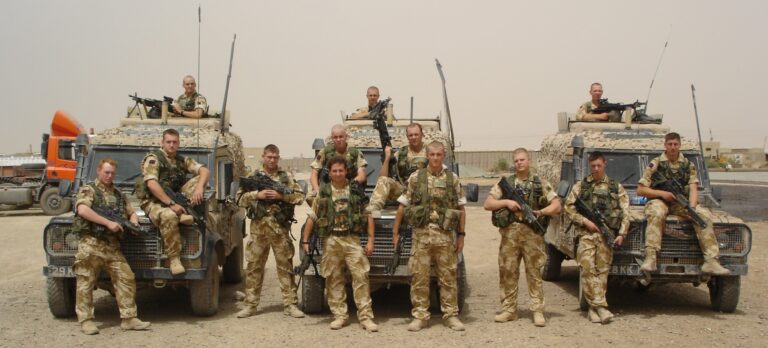
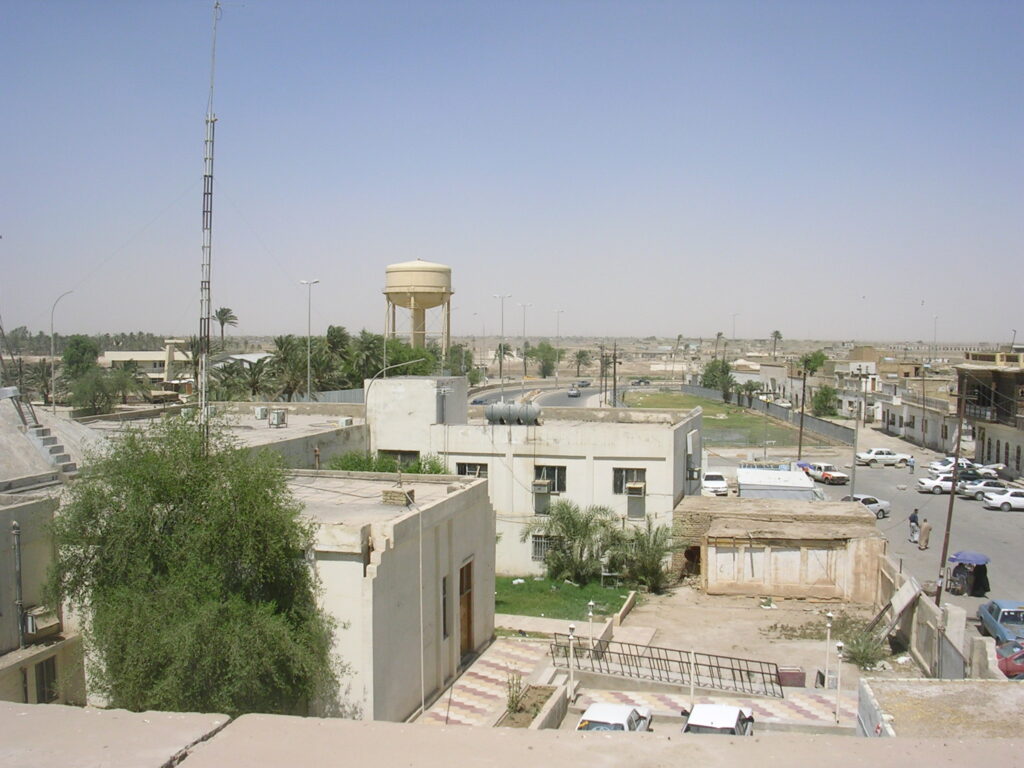
Being on patrol accounted for the bulk of our time. On Day patrols you would usually deploy out of camp before first light and move to a location just outside the main city. The 3 up-armoured Land Rovers carrying a total of 12 of us would be tasked with maintaining a presence within the city and, usually, to visit the areas of importance to tie in with out Iraqi counterparts (Police Headquarters, District Government Headquarters, etc.). The day patrol was usually split up between 2 “outings”, this covered both the transition to day and the transition to night. On average we would spend 8hrs driving and walking about Al-Amarah and its surrounding farmlands.
Night patrols were very much the same, just done through the night. The main difference between the 2 patrols was where the threats lay…
- Day:
- HIGH THREAT – Small arms (Handheld firearms), shoulder launched rockets
- MEDIUM THREAT- Improvised Explosive Devices (IEDs).
- Night:
- HIGHT THREAT – IEDs
- MEDIUM THREAT – Small arms (Handheld firearms)
IEDs were the biggest concern to us. As I mentioned before, the insurgency became experts at constructing, and hiding, these devices aimed solely at killing and maiming our troops. Unfortunately, due to how these were targeted, and hidden, it meant that these were a significant threat to the normal civilians – And the sheer number of civilian casualties that these generates were horrific. During the daylight hours we would form an almost sixth sense when it came to spotting potential IED locations, this became less of an art and more about luck during the evening patrols due to the limited vision.
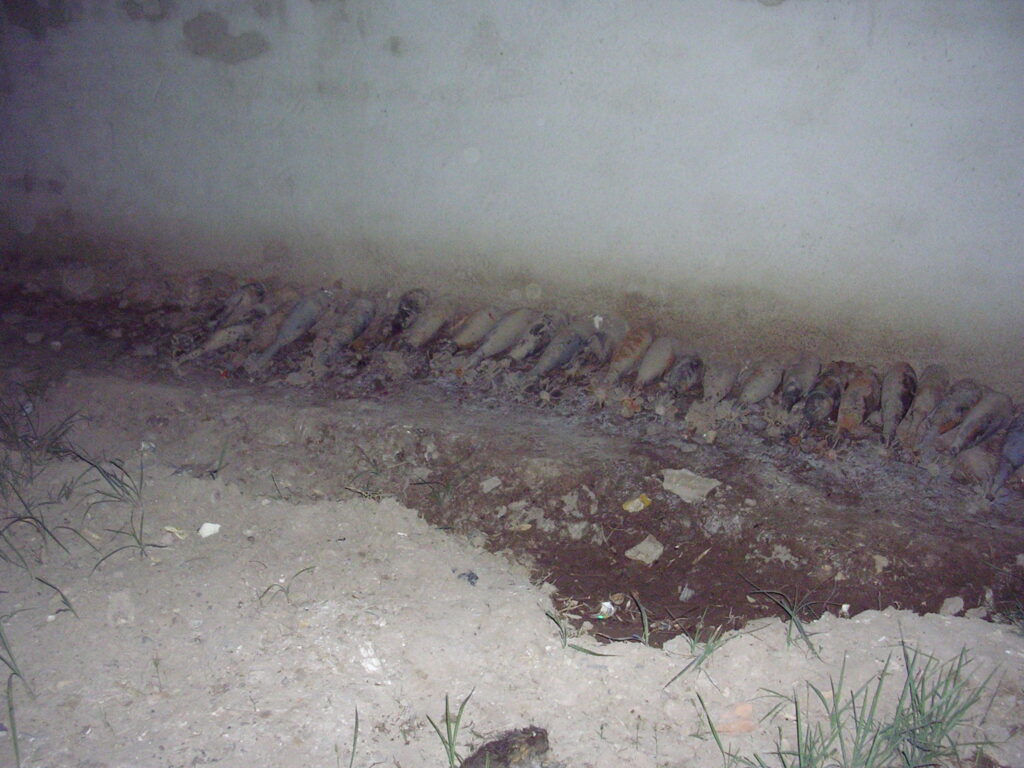
To quantify the size of these IEDs – they would go from 1kg (Fist sized) anti-personnel IEDs to >400kgs anti-vehicle IEDs which could obliterate the up-armoured Land Rovers which we used at that time. These IEDs were typically made up of a charge and a triggering mechanism. Typically, the trigger mechanism was a pressure-plate trigger which meant as soon as pressure was placed on it, the device would form a full circuit and the charge would function. The charges were mad up of any explosive materials that the insurgency could get their hands on from home-made explosive to mortar rounds and rockets.
My favourite memory of my time in Iraq was one of my first patrols. We had deployed out down one of the main routes into the town. The vehicles came to a stop, we alighted and cleared the area around the vehicles. Down the radio came the order, “Assume super-secret hiding positions!”, at this point the established personnel of my Multiple moved into cover around the immediate area. We did our area search and got back into the vehicles to move to another location. This happened 3 or 4 more times during the patrol. Upon returning to camp, I approached my Multiple Commander fearing that I had not listened intently enough during some briefing and missed out on the required action for the command to “Assume super-secret hiding positions!”… He bellowed with laughter at me, and promptly told the rest of the team… “Have you not seen Team America yet?” – At this stage in 2004 the movie had just been released. I had not… I was sat down in front of the movie and told to take notes – My quandary was solved! It was stolen from the movie to maintain the morale of the team during the patrols.
In camp our main threat was from indirect fire (IDF) attacks. The insurgents would set up firing points a few kilometers away with rockets on home-made rails, point them in the direction of the camp, attach them to a timing mechanism, leave the area and wait for the rockets to fire. On our end, at the camp, an indirect fire attack would usually be signaled by a whirling sound above our heads, followed by the hated sound of the IDF alarm which would usually be in the dark hours (Which severely impaired our beauty sleep). Fortunately for us, these attacks were – for the bulk of them – inaccurate and more of a nuisance than anything else. In any case, these attacks would result in the dreaded camp-wide search mentioned previously.
The tents in the camp were exceptionally dark when the lights were off. So dark, in fact, that when the light was off you could not see your hand in-front of your face. This fact played well into our hands in the latter parts of the operational deployment. Our nighttime IDF reaction became this:
- IDF alarm sounds
- Stay in bed
- Put body armour and helmet on
- Everyone be super quiet when someone comes to the tent door
- Don’t do the camp clearance
- Go back to sleep
Fortunately for us we were issued with bomb proof mosquito nets…
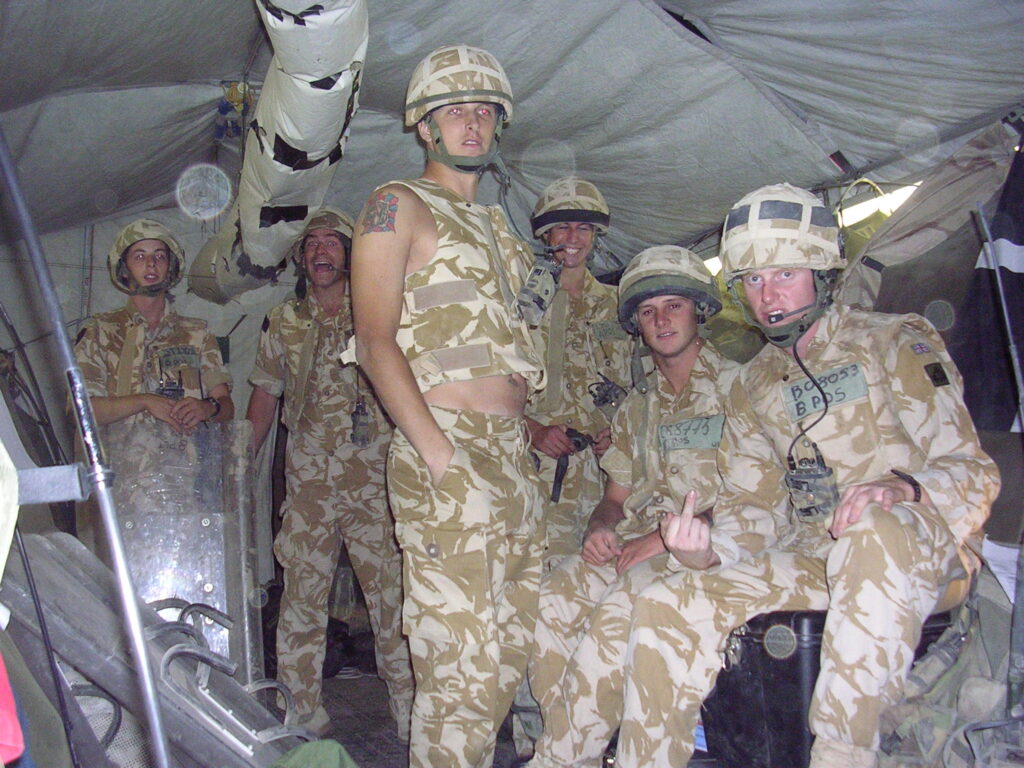
It all ends as it begins…
The strangest concept to come to terms with when you are deployed is how things change back home while you are away. As a “welfare package” we got 30min/week of call time which would allow us to call anywhere in the world for that period. Whilst 30mins is not a long time, you would make it work as much as possible apportioning it to the various people that you wanted to talk to… Undoubtably it was never enough… Core to understanding the disassociation to normal life was the fact that there was no Facebook or Instagram – the mechanisms to stay part of your friends/family life that we are accustom to now non-existent. So naturally key elements of information, and gossip, were missed and sat in limbo for you to uncover once you returned to a normal life.
You counted down your operational deployment in 2 phases…
- How many days until RnR (The 2 week break you get at some point in your Tour)…
- How many days until end of Tour…
With those countdowns came a different acceptance of risk. At the beginning of your Tour you were immortal… Patrols and IDF rarely caused you any concern. You would flaunt your bravado as you strutted around the deserted streets of the town and greeting every civilian as if they were your friend. This was a stark contrast to the last few weeks… As that unobtainable date moved from triple digits, to double digits, to single digits; your bravado and immortality started to fade. Every corner was treated as a vulnerable point, every civilian a suicide bomber kept a vehicle’s length away… The alure of the end of Tour became something that was now obtainable and something you dare not risk.
It was mid-day on our second to last day and we were preparing our kit for one of our final handover patrols. The IDF alarm started to sound as one of the preemptive warning devices had picked up a launch of a rocket towards the camp. As the team scrambled to get their helmets and body armour on the rockets started to streak across the sky above us… 1… 7… 15… 21… 28… 36… 42… In the whole time deployed we had not seen an attack of this magnitude. During the chaos of an operational handover the insurgents had taken the initiative and set up as many rockets as they could muster, and today was launch day. I looked around the room to see the team on the floor – My Multiple Commander screaming, “We have 2 f**king days left – we can’t go out like this!”. Rockets landed inside the perimeter of camp sending shockwaves across the sand-stricken earth. And then there was silence, apart from the loud warble of the IDF alarm… We were alive, the attack was unsuccessful – not 1 casualty. The end was truly in sight.
There is more chaos in leaving an operational theatre than coming into one. We would do multiple equipment checks a day, we would practice how we were going to board the plane, we would practice where we would put our kit… I figured at that point that the Army survived because of 1 thing – Repetition. It made sense, you practice shooting until you can shoot blindfolded (Though I wouldn’t advise it as you will likely shoot someone), you practice contact drills to a point where it is a subconscious action. It was all a process to ensure that everyone knew exactly what they needed to do for a plan to be successful… To ensure that you would do what you needed to do to enable the person next to you the freedom to not worry about you.
The day came for us to leave and, like my Tour started, the shouting began again. In all honesty, this time I was a lot more tolerant – the prospect of 5 days in Cypress for decompression had filled my head with all the good thoughts it could carry, there was no room for this negativity. The drone of the C130 circling high above the camp sounded like the song of a fantastic beast come to carry us away. We shook hands with the troops who had come to replace us, and we boarded the vehicles destined for the dirt-strip runway to home. I remembered looking back out the rear of the vehicle as the camp disappeared slowly into the dust-cloud from the vehicles… Like a bad memory drifting into oblivion, I bid farewell to a home that I was more than happy to leave.
It is weird thinking back to my time in Iraq – everything I look at now is with such rose-tinted glasses that it is a struggle to remember the hard times, the fear, the feelings of being alone… Our minds are so unique in so many ways, but beyond that they hold so much power. The power to turn sadness into joy, to turn loss into love, to turn struggle into fun and good memories. What is apparent to me is that not everyone has be ability to do this and some people live with struggle every day – the bulk of these people are too scared or ashamed to ask for help. We lose so many people in our lives because they don’t speak up and let the pain/worry/loss build up to a point they feel they believe they have no other option to give up… And that is an utter tragedy.
It takes nothing to pick up a phone and call, or send a message to, someone who you have lost touch with and you can see might be struggling. Challenge yourselves to be more attentive to the people around you and how small changes could mean something much bigger is wrong. Help where you can help and encourage where you can’t. As humankind we can be both human AND kind.